Alternative Ways of Seeing: Neurodivergence, Identity and Portraiture
My practice explores alternative approaches to portraiture, asking how we recognise and represent ourselves and others beyond the conventions of the face and figurative image.
Working across photography, video, painting, digital media and collaborative participation, I investigate identity, memory and the gaze. Informed by lived experience of neurodivergence and disability thinking, my work questions who controls how we are seen and how images can challenge assumptions about difference.
SNUG
Participation, sensory experience and identity
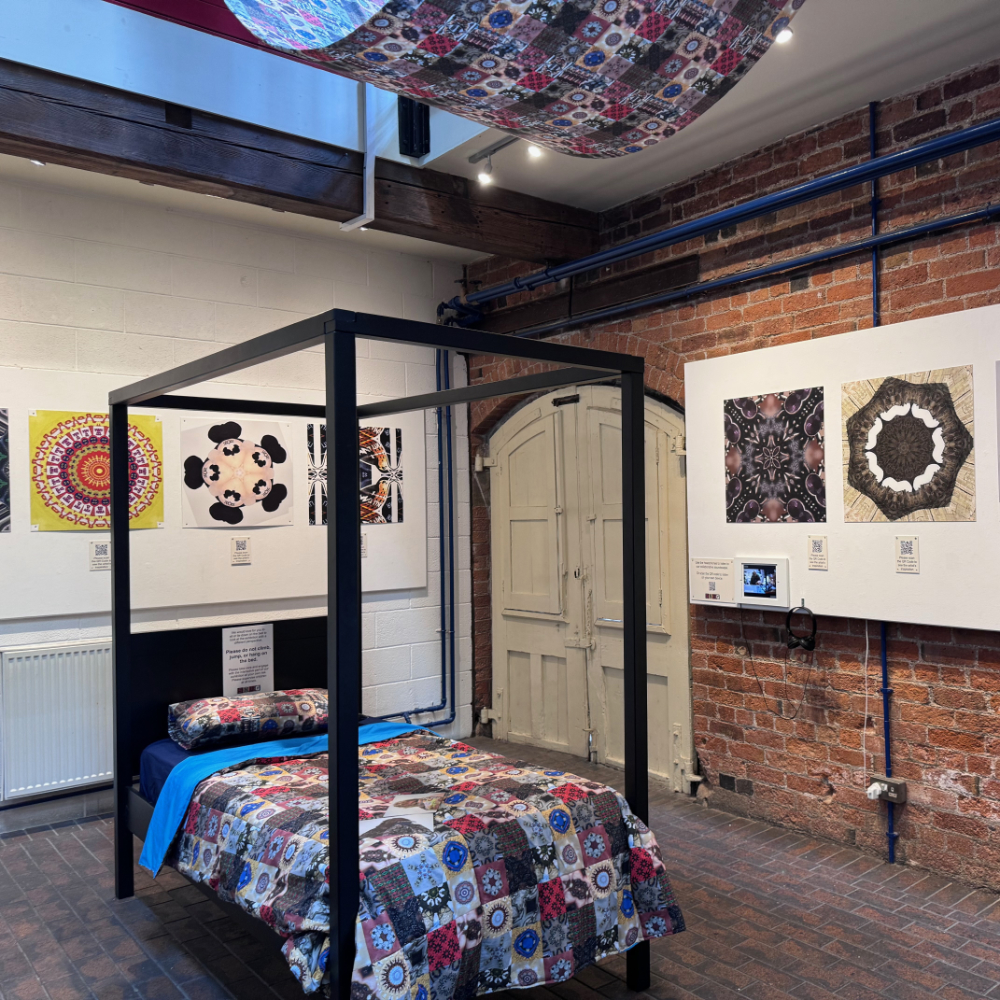
Developed with members of the Swadlincote Asperger’s Society, SNUG explored identity, comfort and sensory experience through conversation, photography and creative experimentation. Participants developed personal visual motifs that became bespoke fabrics and hand-crafted weighted quilts, forming an immersive installation at the Brewhouse Arts Centre. The project explored how identity can be expressed through material, sensory associations and collaborative making rather than conventional portraiture.
Don’t Stare
The gaze, agency and representation

Originally commissioned by Onyx Collective at Disability Arts Online in 2022, Don’t Stare challenges the uninvited gaze and its potential to objectify disabled and neurodivergent people. In collaboration with Ikon Youth Programme, I developed photographic portraits through collage, exploring the differences between how we see ourselves and how others see us. The work shifts portraiture from passive observation towards negotiated representation.
We Become Abstract
Memory, absence and identity
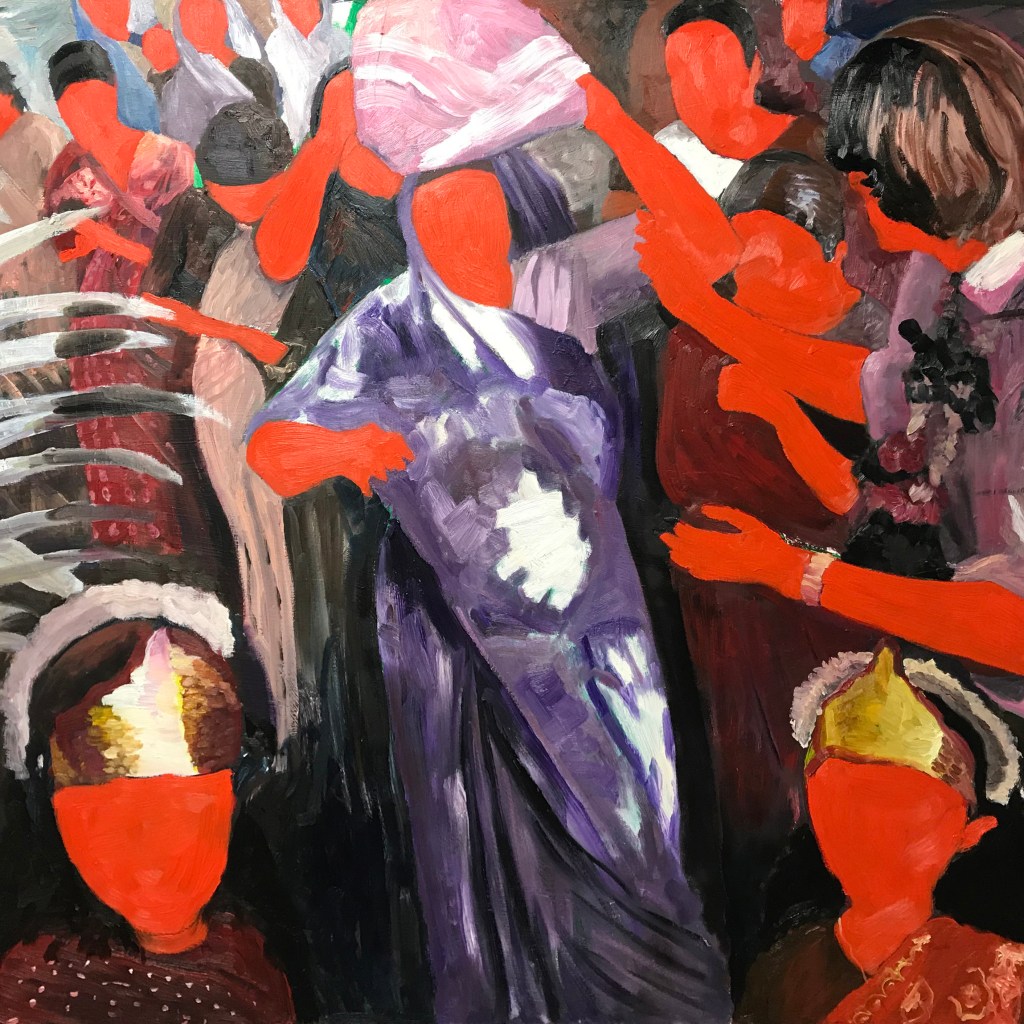
Translating everyday photographs into dreamlike oil paintings, We Become Abstract explores how we remember people beyond facial recognition. Distortion, vivid colour and the removal of familiar details invite viewers to question established ways of seeing and representing marginalised people.
Lost Under Still Currents
Recognition and historical memory
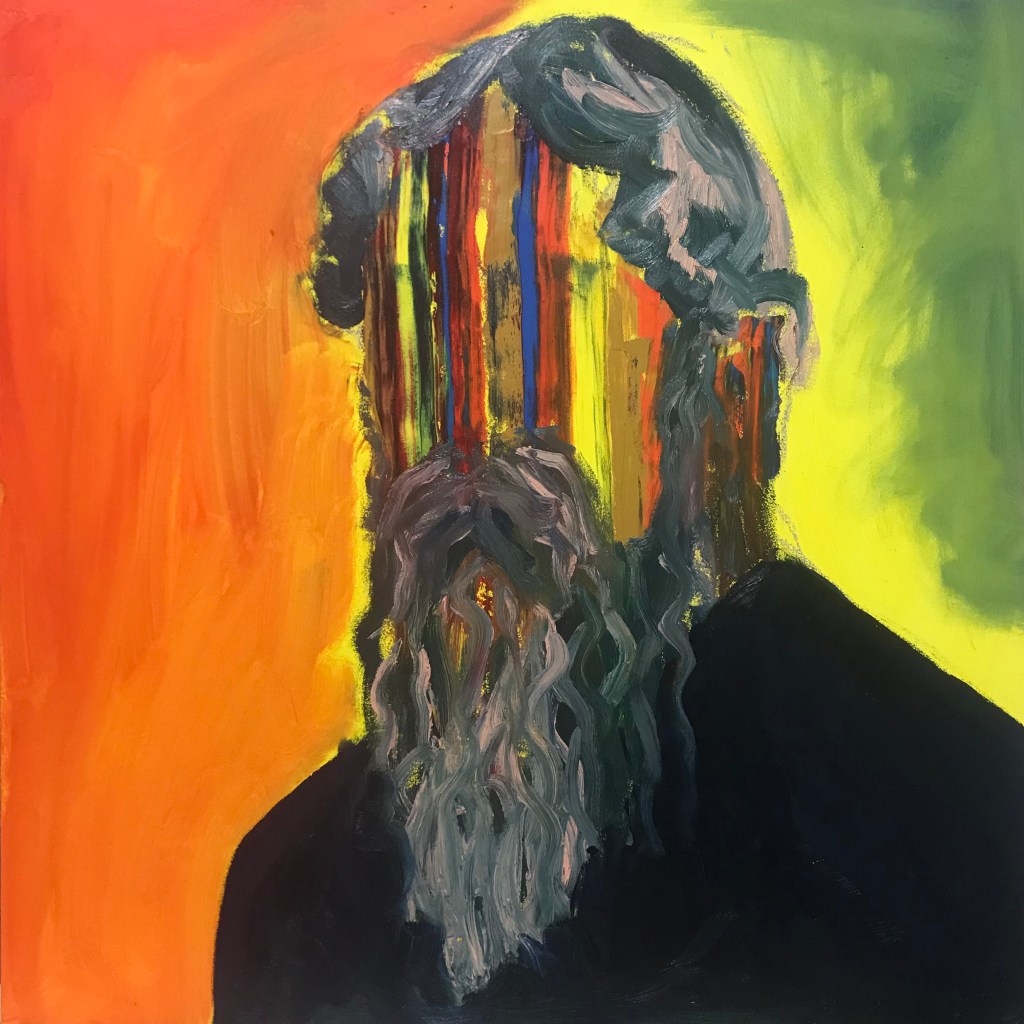
This experimental offshoot explores portraits of people of colour whose significant contributions to history remain relatively unfamiliar. By removing facial and skin details while retaining hair and clothing, the paintings question how recognition is constructed, who is remembered or forgotten, and who owns the memory of an individual.
Half-Life
The self beyond the body

Through digitally manipulated self-portraits, photographs, objects and personal associations, Half-Life deconstructs identity beyond the recognisable human form. The resulting meta-portraits explore how memory, environment and material traces contribute to our sense of self.
An ongoing enquiry
Together, these projects challenge the limits of conventional portraiture. Through fragmentation, absence, memory, sensory experience and collaboration, I explore how identity might be represented differently. This ongoing enquiry informs my development of accessible participatory approaches that enable people to shape how they are seen, understood and represented.


You must be logged in to post a comment.